Do AR glasses work in sunlight? Brightness, lens tint and outdoor visibility explained
The short answer: some AR glasses work outdoors, but conditions matter
AR glasses can remain readable outdoors, yet a manufacturer’s peak-brightness number cannot answer the question by itself. The result depends on the display architecture, how much ambient light reaches the eye, the darkness and coverage of the lens, the colors and size of the interface, and whether the product is designed for transparent prompts or an immersive private screen.
A bright microLED heads-up display may keep simple navigation arrows and text visible against daylight while preserving a view of the street. Micro-OLED display glasses often improve contrast by darkening the lens or using a removable shade. Neither approach makes every image equally clear in direct sun. Buyers should judge the complete optical system and the intended task rather than compare one brightness figure across unlike products.
Why sunlight makes a virtual image harder to see
An optical see-through display adds light to the wearer’s view; it does not remove the bright real-world background. When direct sun, pale pavement or a bright sky enters the eye, the virtual image must compete with that ambient light. Dark interface elements cannot be projected as true black into a transparent lens, so outdoor designs usually rely on bright symbols, strong color choices and a controlled field of view.
Immersive display glasses face a related contrast problem. Their micro-OLED image may be bright, but light entering through or around the lens can wash out dark scenes. Lens tint, electrochromic dimming and physical shades reduce the competing background. Fit also matters: side light and reflections can lower perceived contrast even when the display specification is unchanged.
Nits are useful, but they are not directly comparable across every design
A nit is a unit of luminance. It is useful when the measurement method and optical path are comparable, but AR product pages may describe panel brightness, peak brightness, perceived brightness or brightness measured after the optics. Those values are not interchangeable. A headline number also says little about how long peak output is sustained, how much of the image reaches the eye or how the system behaves thermally.
RayNeo states that the X3 Pro’s Firefly optical engine reaches up to 6,000 nits. XREAL lists 700 nits as the highest perceived brightness for One Pro. The large numerical difference does not make a simple six-thousand-versus-seven-hundred buying test: X3 Pro is a transparent binocular microLED heads-up system, while One Pro is a micro-OLED personal display with adjustable lens transparency. Their optical jobs and measurement language differ. These are manufacturer specifications, not HoloNexa laboratory measurements.
Lens tint can improve contrast more than another headline number
Electrochromic lenses change how much outside light passes through the glasses. XREAL documents three dimming modes on One Pro. VITURE says Luma Ultra combines its display with electrochromic film, while its Pro-series documentation describes adjustable tint intended to improve the background behind the virtual image. Darkening the lens can make films, games and desktop content easier to see without demanding a proportionally brighter display.
Snap takes a different approach with SPECS: its official page says the transparent lenses shift from clear to tinted over about ten seconds as the wearer moves between indoor and outdoor conditions. SPECS is still a preorder product with shipping expected to begin in fall 2026, so this is an announced feature rather than a HoloNexa-tested result. Tint improves contrast, but it also changes how the wearer sees the physical world; that trade-off matters for walking, navigation and safety-critical tasks.
Transparent AR and private-screen glasses solve different outdoor problems
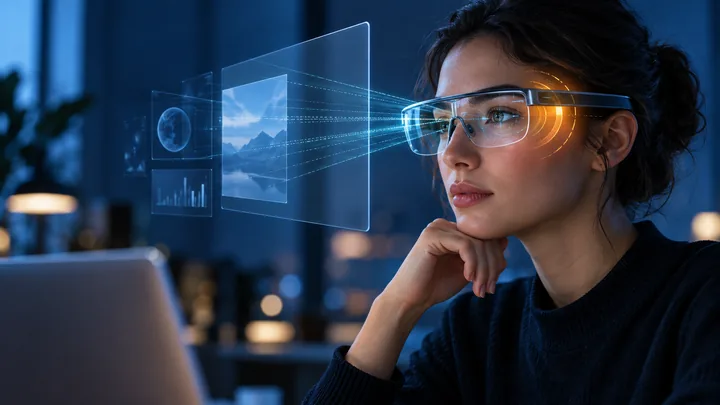
Transparent heads-up glasses are intended to keep the surroundings visible while showing compact information. For that use, legibility of text, icons and navigation cues matters more than cinematic black levels. Interface design, waveguide efficiency, eye-box alignment and the wearer’s position relative to the sun can matter as much as peak output.
Private-screen glasses prioritize a large image for video, gaming or work. They normally benefit from stronger tint or a light-blocking shade outdoors, but the darker lens reduces awareness of the environment. A product that works well for a seated passenger or shaded café should not automatically be treated as appropriate for crossing streets, driving or operating equipment. Follow the manufacturer’s safety instructions and keep full situational awareness.
A practical outdoor test during the return window
Test the exact task in several controlled conditions: open shade, bright overcast light, sun behind you and sun from the side. Use the same interface or video, keep the device at a comfortable brightness, and check the center and edges of the image. Look for text washout, internal reflections, color loss, eye-box dropouts and whether the display remains aligned as you walk normally.
Then test the lens controls. Compare clear and dark modes, note how quickly automatic tint reacts, and check whether prescription inserts or your facial fit create extra reflections. Do not stare toward the sun to evaluate a display. A short, safe trial reveals more about usable outdoor contrast than a spec-sheet comparison because face shape, pupil position and intended content affect the result.
What to verify before buying AR glasses for outdoor use
Confirm the display type, the manufacturer’s exact brightness wording, manual or automatic lens tint, the number of dimming levels and whether a physical shade is included. Check UV-protection documentation separately from display visibility: a readable virtual image is not proof of eye protection. Also verify operating-temperature limits, prescription support, battery behavior at high brightness and whether core navigation or translation features work in your country.
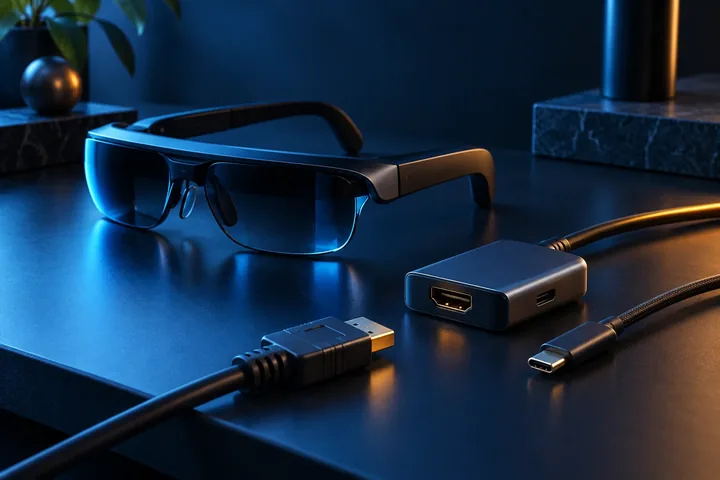
For tethered display glasses, confirm that the phone or computer provides a supported video signal and add the cost of any adapter. For standalone AI glasses, check network requirements, subscriptions, language support and offline behavior. If outdoor visibility is essential for work, request a real demonstration under representative lighting and define a measurable acceptance test before a larger purchase.
HoloNexa analysis: contrast management is the more useful buying lens
The market is converging on two complementary tools: brighter emitters and better control of incoming light. Transparent heads-up products push display output so compact information can survive against the world. Entertainment-focused glasses increasingly add electrochromic dimming or shades so the display does not have to overpower the environment by brightness alone.
That makes “highest nits” a weak universal ranking. A better comparison asks whether the glasses preserve the right amount of real-world visibility for the task, whether the interface remains readable in the expected lighting, and whether the tint, fit and power use stay comfortable. Outdoor performance is a system property. Buyers should treat manufacturer numbers as inputs to a decision, then validate the complete experience during the return period.
Frequently asked questions
Can AR glasses be used in direct sunlight? Some can show readable prompts or media, but performance varies with the display, lens tint, content and sun angle. Do higher nits always mean better outdoor visibility? No. Measurement methods, optical efficiency and ambient-light blocking differ. What are electrochromic lenses? They electrically change tint to control outside light and improve virtual-image contrast.
Do dark lenses make AR safer outdoors? They may improve the image, but reduced real-world visibility can create a different risk. Can a shade help? A compatible shade can improve media contrast, especially for private-screen glasses, while limiting awareness. Are SPECS generally available? As verified on October 1, 2026, Snap lists them for preorder with shipping expected to start in fall 2026; a refundable deposit is not confirmed general availability.
Guide details and methodology
All insightsTechnology explainer
Outdoor AR visibility depends on more than a high nit figure. Learn how display type, lens tint, contrast and fit affect what you can actually see.
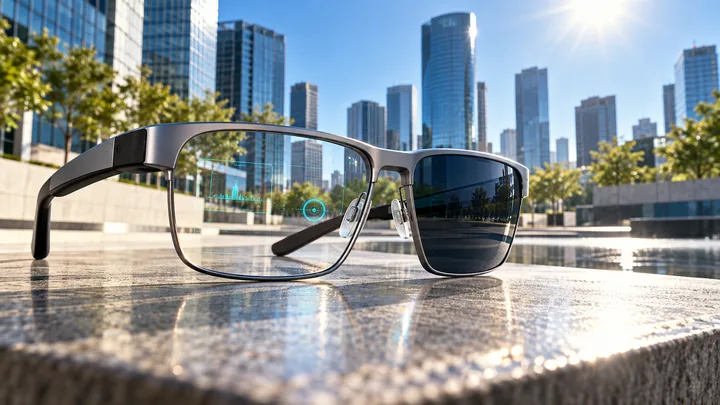 Original HoloNexa editorial illustration. It is not an official product photograph.
Documented compatibility can change with hardware, software and accessory revisions. No hands-on testing is claimed.
Recorded US prices
- RayNeo X3 Pro$1,299 · Price checked: November 5, 2026 · Official price source
- XREAL One Pro$599 sale · regular $649 · Price checked: November 2, 2026 · Official price source
This status applies to the price record only; specifications, compatibility and final availability require separate confirmation.
This research-based guide uses manufacturer documentation for product facts. Evaluation and buying guidance are independent analysis; it is not presented as hands-on testing.
Official sources
Specifications, availability and program terms can change. Confirm current information on the linked manufacturer pages.