Rokid Max 2 buyer's guide: fit, sources and the real use case
The checks that matter before buying lightweight AR display glasses for entertainment or work.
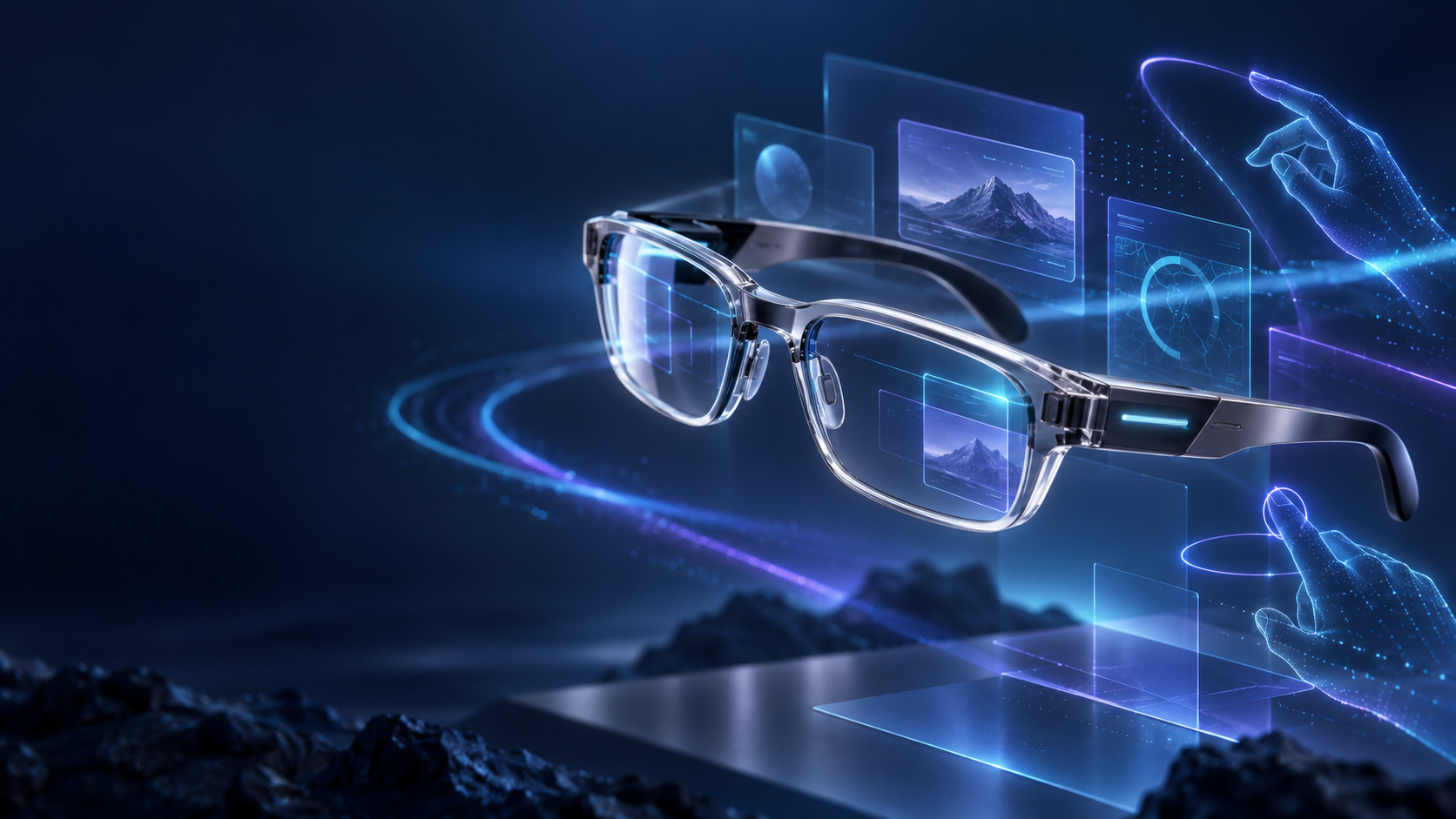
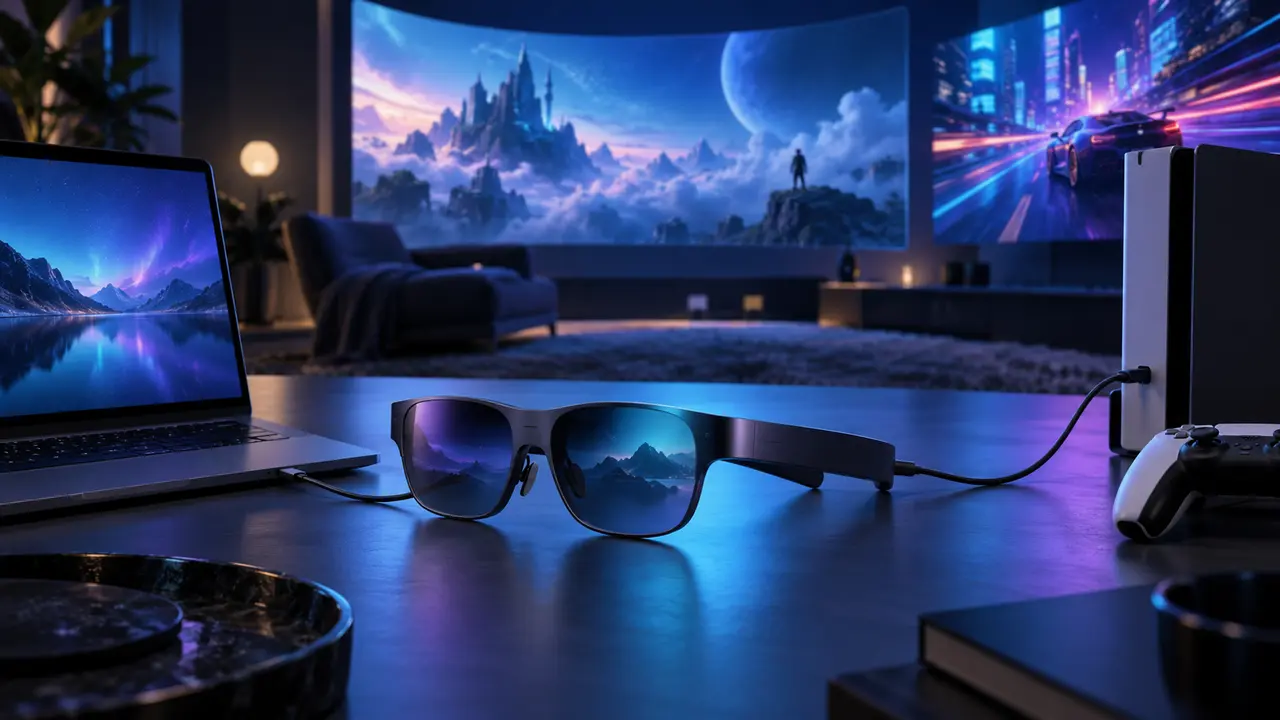 Original HoloNexa editorial illustration. It is not an official product photograph.
This research-based guide uses manufacturer documentation for product facts. Evaluation and buying guidance are independent analysis; it is not presented as hands-on testing.
Designed as a private display
Rokid describes Max 2 as lightweight AR glasses that turn a compatible source into a private large screen. It requires an external device and should not be confused with a self-contained mixed-reality headset.
Its built-in myopia adjustment may be convenient for some users, but it does not address every prescription. Buyers with astigmatism or complex correction should verify the supported lens solution.
Test your exact setup
Direct connection normally depends on USB-C video output. List every device you intend to use, then map the required cable, adapter, dock and power arrangement. A glasses-only price can understate the complete setup.
Evaluate sharpness at the edges, screen stability, audio leakage and comfort for at least a full viewing session. A short bright demo does not reveal long-term fit.
Buying position
Max 2 is a credible option for personal media, compatible handheld gaming and a portable secondary display. Users seeking multiple anchored applications should compare the complete Rokid AR Spatial bundle.
Rokid publishes an affiliate program. Approval, regional eligibility and current commission terms should be confirmed when HoloNexa activates commercial links.
Official sources
Specifications, availability and program terms can change. Confirm current information on the linked manufacturer pages.