Snap SPECS 2026 buyer’s guide: price, release window and preorder reality
Snap SPECS start at $2,195, but a preorder is not a completed order. Here is what is confirmed, what remains unclear and who should consider waiting.
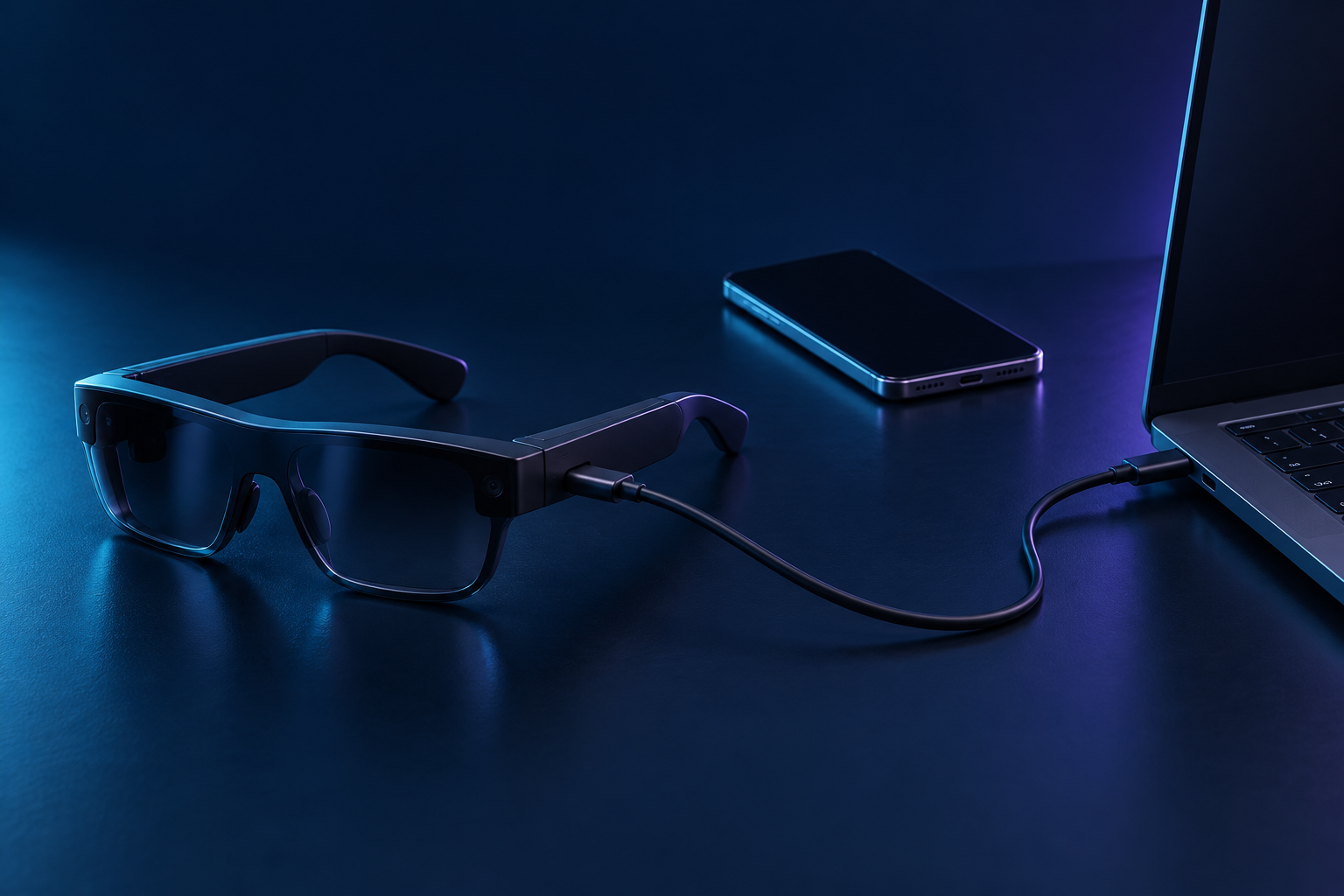
 Original HoloNexa editorial illustration. It is not an official product photograph.
Documented compatibility can change with hardware, software and accessory revisions. No hands-on testing is claimed.
This research-based guide uses manufacturer documentation for product facts. Evaluation and buying guidance are independent analysis; it is not presented as hands-on testing.
The short answer: SPECS are not generally available yet
Snap’s official US page lists SPECS from $2,195 and says shipping is expected to start in fall 2026. The page currently describes the transaction as a preorder. Its FAQ states that the refundable deposit reserves a place and is not an order confirmation; Snap says it will request the remaining balance closer to the shipping window.
That distinction matters. HoloNexa does not treat a reservation, waitlist or estimated shipping season as confirmed retail availability. Buyers can express intent in the United States, United Kingdom and France, but the official pages do not provide a specific first-shipment date. Availability, local pricing and service terms can differ by market.
Price and connectivity options
The confirmed US starting price is $2,195 for the Wi-Fi configuration. Snap lists a Wi-Fi and cellular option for an additional $200; it includes a 5G-capable charging case, while US mobile service requires a separate Verizon plan. The add-on price is hardware-related and should not be confused with the cost of cellular service.
The box is described as including the glasses, charging case, charging cable, cleaning cloth, quick-start guide and nose-pad kit. Snap also lists free shipping, free returns and a one-year limited warranty. Confirm the checkout total, financing eligibility, taxes and region-specific terms before paying; this article records the US documentation rather than converting it to another currency.
What the display and controls are designed to do
SPECS use a transparent waveguide display that Snap says produces 16 million colors across a 51-degree field of view. Electrochromic lenses can move between clear and tinted states. Voice commands and hand gestures are the main controller-free inputs, and dual Snapdragon processors divide spatial understanding and experience rendering.
Snap positions the glasses as a standalone spatial computer for navigation, translation, calls, browsing, media, virtual screens and shared Lenses. A magnetic interface supports charging and a USB-C streaming cable for compatible phones, computers and gaming devices. These are manufacturer descriptions, not results from independent HoloNexa testing, and the official page does not yet publish a complete compatibility matrix.
Fit, prescription support and practical comfort
Two frame sizes are listed: 47 mm Narrow at 132 grams and 52 mm Wide at 136 grams. Those weights are far above ordinary eyewear, so a virtual fit result cannot establish long-session comfort. The official virtual try-on requires an iPhone XS or newer running iOS 18 or later.
Snap plans custom single-vision prescription inserts from -8 to +2 diopters through third-party partners. The support page says ordering details will arrive closer to the buyer’s ship date. People with astigmatism, progressive lenses or prescriptions outside that range should obtain written confirmation rather than infer support from the phrase prescription-ready.
Battery life and other missing buying information
The current product page mentions a built-in battery and charging case but does not provide a numerical battery-life claim. It also does not publish a complete list of compatible source devices, every supported app, detailed display resolution, repair pricing or the long-term software-support period. Those omissions make total ownership difficult to judge before shipments begin.
A serious preorder decision should therefore separate confirmed hardware details from unresolved operational questions. Ask how long the glasses run in your intended mode, whether the cellular case works outside the United States, which functions need a connected account or cloud service, and what happens to core features if a third-party integration changes.
SPECS Intelligence: useful idea, early-access service
Snap describes SPECS Intelligence as an assistant that connects context across apps and suggests next actions. The official service page says it can prepare drafts and organize information but requires approval before sending messages or taking actions. It is launching in the United States first, and access remains limited; an iOS preview and a waitlist for broader early access do not establish universal feature availability.
The service can be used on iPhone and Mac without the glasses. That creates a sensible evaluation path: test the available software before committing to expensive hardware. Buyers should check which connected accounts are required, which functions work on-device and which depend on secure cloud processing.
Privacy claims and questions buyers should still ask
Snap says SPECS do not use facial recognition to identify people and do not continuously save audio, photos or video. Its privacy page describes a visible external LED and an audible signal during capture, permission requests for sensitive camera, microphone and precise-location access, and separate processors that can provide spatial understanding without automatically giving applications raw sensor data.
Those are important design claims, not a substitute for reading the policies of every connected service. Before workplace or educational use, review account permissions, cloud retention, deletion controls, bystander expectations and organizational rules. A visible recording indicator reduces ambiguity; it does not by itself resolve consent, security or local-policy obligations.
Who should preorder—and who should wait
Developers, spatial-computing studios and organizations with a defined pilot may find value in early access to a standalone waveguide platform. The developer portal supports building and publishing SPECS Lenses, which gives these buyers a concrete reason to enter before the wider market matures. Even then, define a narrow use case, owner, privacy review and success metric before ordering multiple units.
Most consumers should wait for confirmed shipping, a numerical battery specification, compatibility details and independent long-session testing. At $2,195 before the cellular add-on, prescription inserts or service costs, curiosity alone is a weak purchasing case. HoloNexa’s analysis is that the platform is worth watching, while the current preorder is best treated as an early-adopter commitment rather than a routine retail purchase.
Frequently asked questions
When will Snap SPECS ship? Snap says shipping is expected to begin in fall 2026, but the official pages do not provide a specific date. Are they available now? They are available for preorder in the US, UK and France; the deposit is not an order confirmation. How much do they cost? The official US starting price is $2,195, with the Wi-Fi and cellular configuration adding $200 before any separate mobile plan.
Do SPECS need a phone? Snap presents them as standalone glasses, while also documenting companion software and optional streaming from compatible devices. Do they support prescription lenses? Planned third-party single-vision inserts cover -8 to +2 diopters. Has HoloNexa tested them? No. This guide analyzes official documentation verified on September 17, 2026 and makes no hands-on performance claim.
Official sources
Specifications, availability and program terms can change. Confirm current information on the linked manufacturer pages.