Proto Luma enterprise guide: specifications, limits and deployment planning
What Proto Luma is—and is not
Proto describes Luma as a life-size system for presenting live or pre-recorded people and content. The effect is shown inside an audience-facing cabinet; it should not be confused with a free-space volumetric display that creates light throughout an open three-dimensional volume.
The official product page lists an 86-inch multi-touch display, an AI-enhanced 4K camera with 10× zoom, stereo speakers, a six-microphone array and hardware-enhanced echo cancellation. These are manufacturer specifications, not results from HoloNexa hands-on testing.
Verified physical and electrical requirements
Proto lists the unit at 88 × 50 × 24 inches (223 × 127 × 60 cm) and 410 pounds (185.97 kg) without its transport case. With the case, the listed weight is 772 pounds (350 kg). The support documentation gives the wheeled unit as 88 inches high, 50.25 inches long and 23.75 inches wide, so procurement teams should use the detailed support dimensions for access planning.
Electrical input is specified as 100–240 V, 50/60 Hz and 15 A. Connections include 2.5 Gbps Ethernet, USB 3.0, HDMI input and output, infrared remote control and 3.5 mm audio input and output. Confirm the delivered configuration and local electrical requirements with Proto before installation.
Environmental and software limits
The official user guide states that Luma is intended for indoor use only and should not be used near water or in direct sunlight. Those constraints matter for foyers, shop windows, outdoor events and stages with strong spill light; a visually impressive demo does not remove the need for a controlled environment.
Proto identifies ProtoOS, Proto Cloud, HoloStudio Pro and the Proto Studio App as parts of the supported workflow. Buyers should verify which services, licenses, storage, security controls and support commitments are included in their proposal instead of assuming every platform capability is bundled with the hardware.
Live beaming needs an end-to-end test
Proto's support documentation states that live beaming through the Proto Studio App needs 15 Mbps upload and download at both ends; the Live Beam Kit requires 25 Mbps in both directions. Treat those figures as minimum vendor guidance, not a guarantee of production quality under congestion, packet loss or venue-network restrictions.
Rehearse the complete path: capture, framing, lighting, return audio, network, display and fallback content. Assign an operator at the venue and a responsible person at the sending location. A local speed test alone does not validate the entire live workflow.
Who should shortlist it
Luma is most credible when an organization has repeated, high-value uses for life-size remote presence or managed character content: executive communication, education, events, hospitality, branded installations or remote expertise. Its scale, weight and infrastructure make it a planned deployment rather than an impulse purchase.
Proto does not publish a current standard price on the official Luma page, so HoloNexa retains “Request a US quote.” Ask for an itemized proposal covering transport, installation, software, content production, training, warranty, support, subscriptions and any capture equipment. For occasional events, compare ownership with a managed rental before committing.
Guide details and methodology
All insightsBuyer’s guide
Verified dimensions, display, camera, power, networking and environmental limits—plus the questions to resolve before an enterprise deployment.
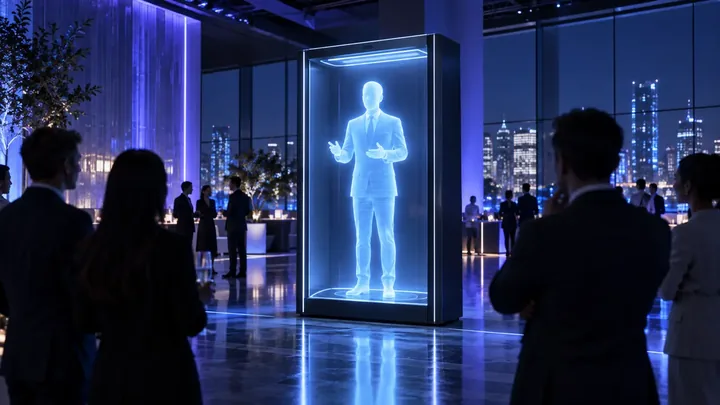 Original HoloNexa editorial illustration. It is not an official product photograph.
Documented compatibility can change with hardware, software and accessory revisions. No hands-on testing is claimed.
Recorded US prices
- Proto LumaRequest a US quote · Price checked: November 2, 2026 · Official price source
This status applies to the price record only; specifications, compatibility and final availability require separate confirmation.
This research-based guide uses manufacturer documentation for product facts. Evaluation and buying guidance are independent analysis; it is not presented as hands-on testing.
Official sources
Specifications, availability and program terms can change. Confirm current information on the linked manufacturer pages.