Hololuminescent vs light-field displays: do not confuse the two
Looking Glass now offers two different spatial display families. Here is how their intended roles differ.
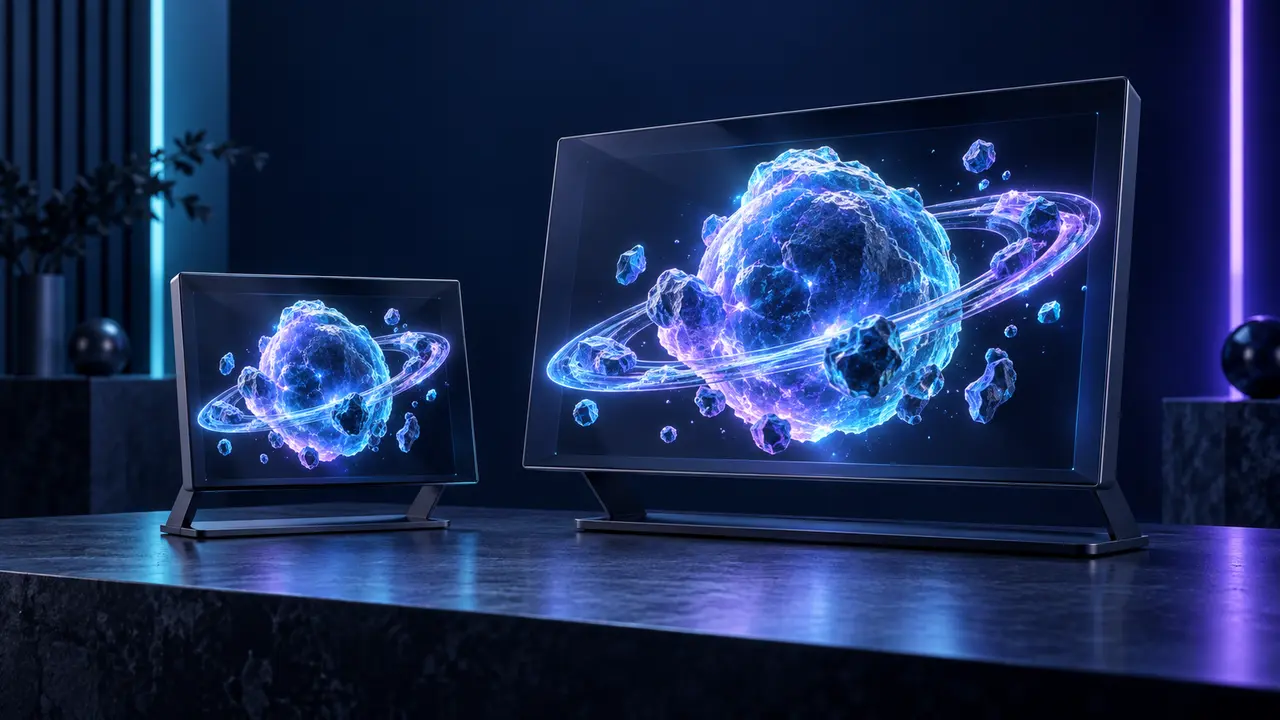
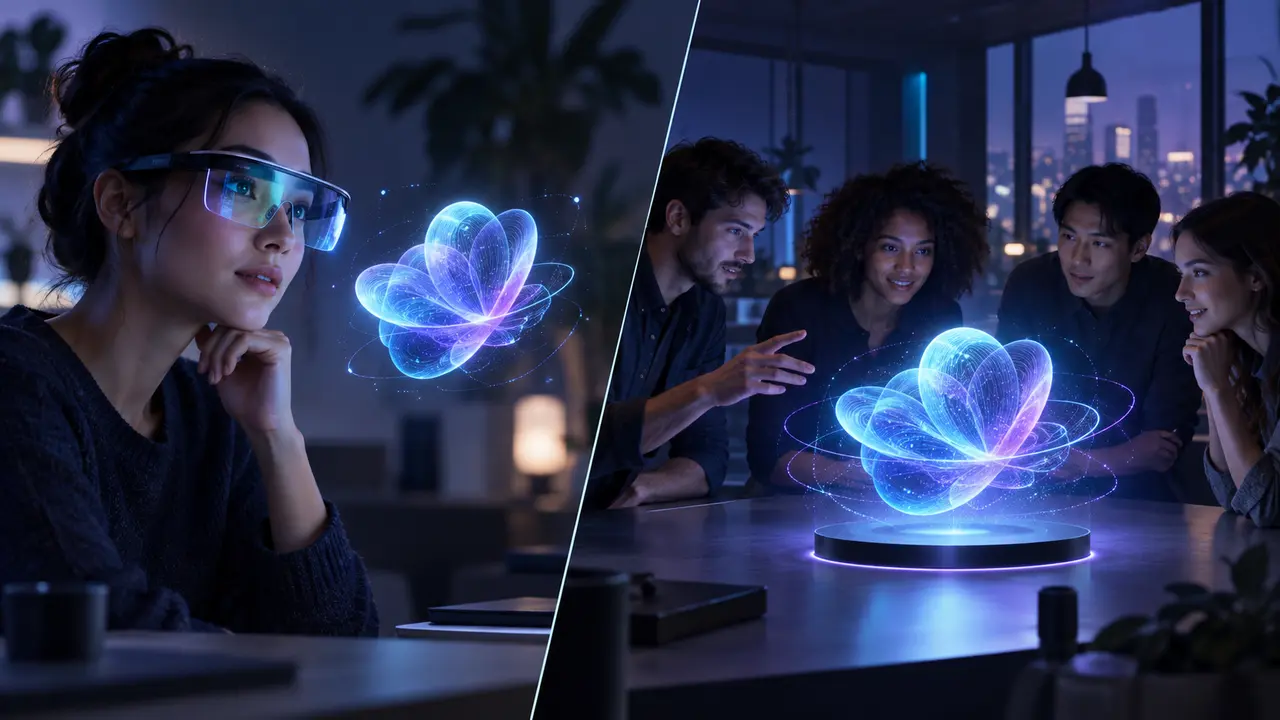
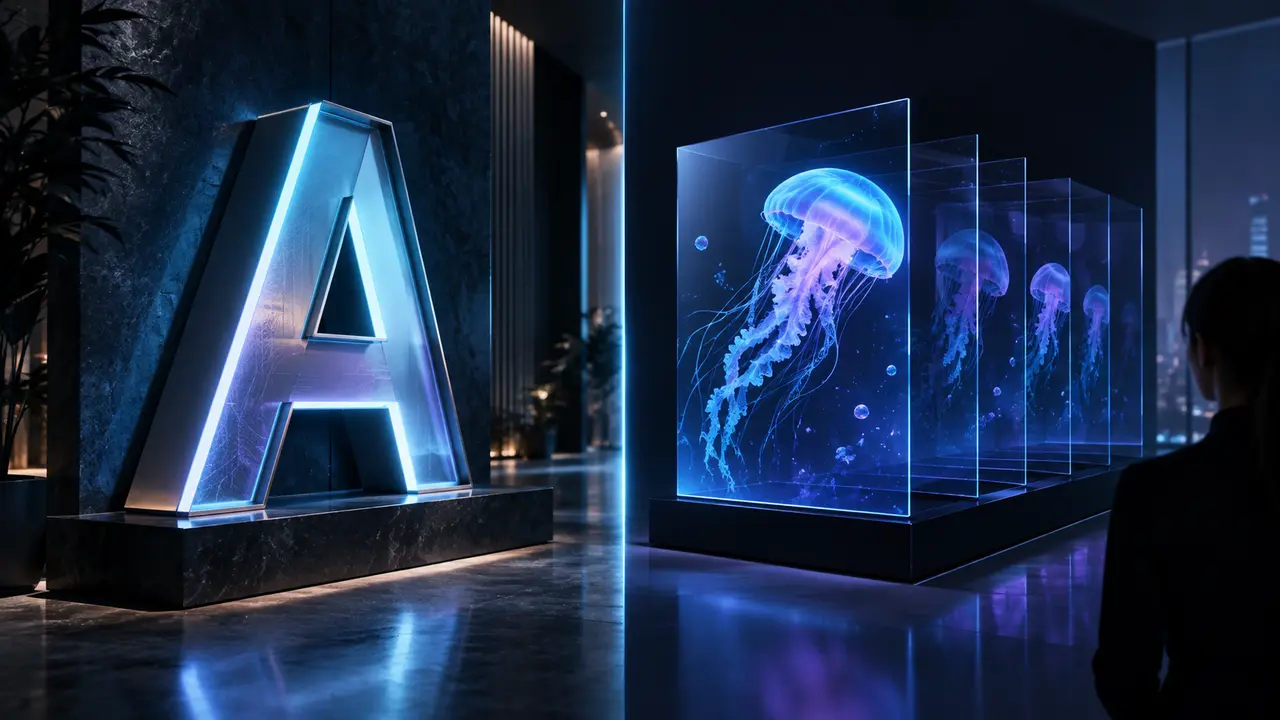 Original HoloNexa editorial illustration. It is not an official product photograph.
This research-based guide uses manufacturer documentation for product facts. Evaluation and buying guidance are independent analysis; it is not presented as hands-on testing.
Two products, two content models
Looking Glass describes its Hololuminescent Display line as combining a fixed holographic volume in the optical stack with bright conventional display content. Its light-field displays instead generate multiple views of a 3D scene for glasses-free spatial visualization.
That distinction changes what a buyer should test. HLD is positioned toward signage, characters and attention-grabbing dimensional presentation. Light-field models are better aligned with interactive 3D assets, research and visualization workflows.
Questions for a real deployment
Ask whether your campaign needs arbitrary 3D models, interactive perspective and developer tools, or a controlled dimensional effect around prepared content. Also test ambient light, off-axis visibility, installation orientation and the effort required to create each new asset.
A specification table cannot answer whether the effect is right for your venue. Request a sample using your subject and film it only as a secondary reference; camera footage rarely reproduces the in-person spatial impression accurately.
Buying guidance
Use HLD when the project resembles high-impact digital signage and the content team can work within its creative format. Use a light-field display when the central value is inspecting or interacting with genuine 3D data from changing viewpoints.
Treat the two families as complementary technologies rather than a simple good-better-best ladder.
Official sources
Specifications, availability and program terms can change. Confirm current information on the linked manufacturer pages.