Holograms in retail: five uses that can be measured
Move beyond novelty with concrete objectives for product storytelling, configuration and store traffic.
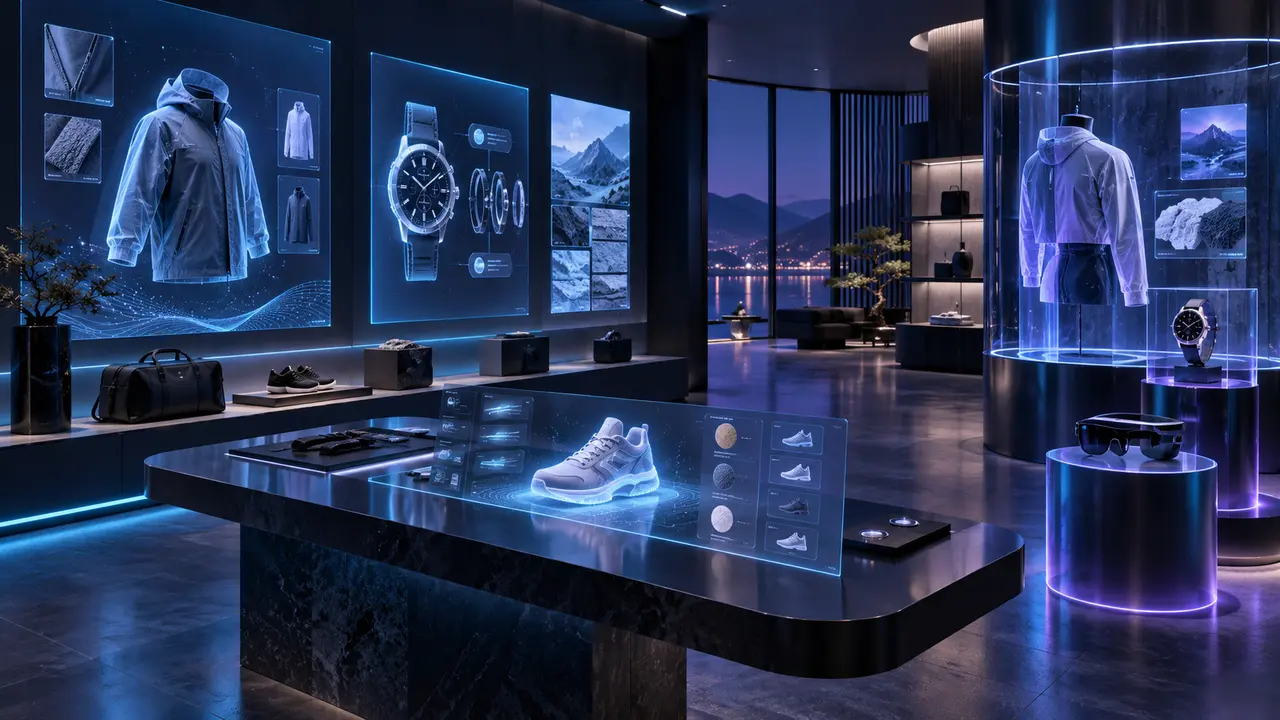 Original HoloNexa editorial illustration. It is not an official product photograph.
This research-based guide uses manufacturer documentation for product facts. Evaluation and buying guidance are independent analysis; it is not presented as hands-on testing.
1. Product visualization
Spatial displays can reveal form, layers and options where a physical sample is unavailable or expensive. Measure assisted conversations, configurator completion and the rate at which viewers request the real product.
2. Launch moments and wayfinding
An LED fan or dimensional signage display can create a strong distant cue. Measure footfall into the activation zone and dwell time, but keep practical information available on a conventional screen.
3. Expert presence
Telepresence can connect a specialist, designer or host to multiple stores. Measure resolved consultations, session utilization and travel avoided. Audio privacy and reliable scheduling matter as much as the visual effect.
Official sources
Specifications, availability and program terms can change. Confirm current information on the linked manufacturer pages.