Spatial displays in healthcare: promising uses and hard limits
Education, anatomy and remote expertise can benefit—but clinical claims require evidence and governance.
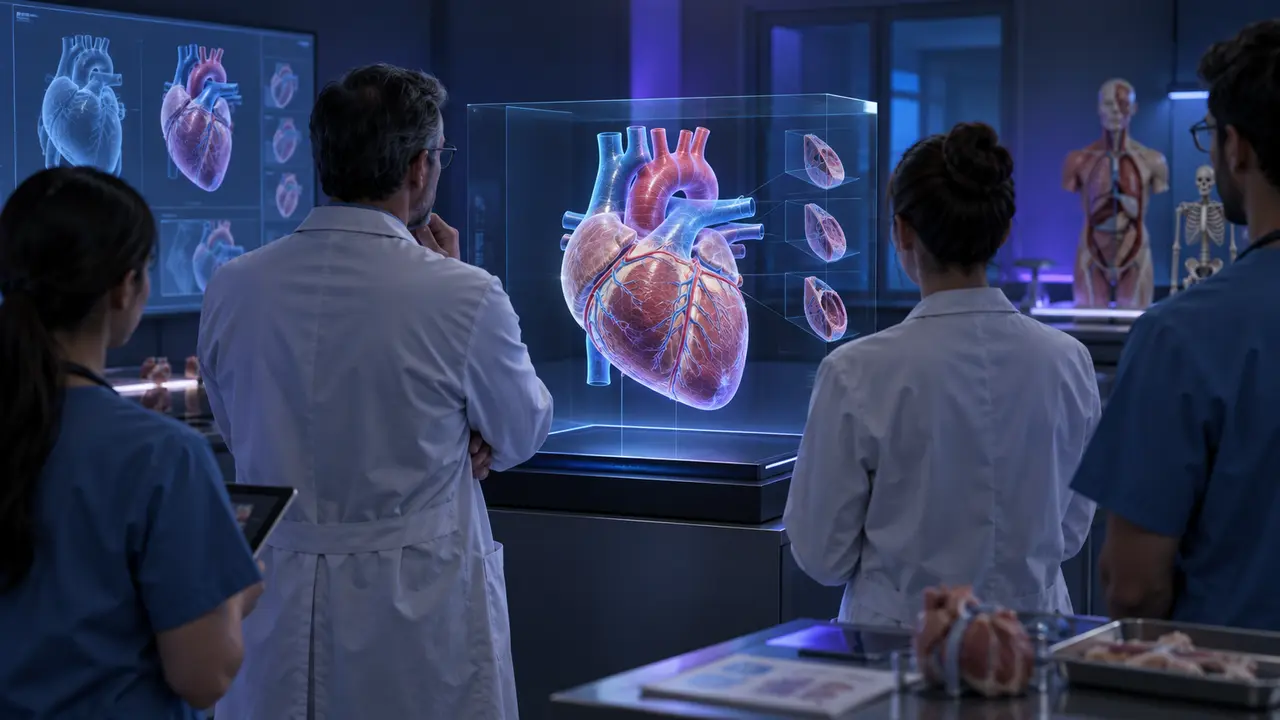 Original HoloNexa editorial illustration. It is not an official product photograph.
This research-based guide uses manufacturer documentation for product facts. Evaluation and buying guidance are independent analysis; it is not presented as hands-on testing.
Strongest near-term uses
Shared 3D visualization can help teams discuss anatomy, imaging and procedures. Telepresence can support education, specialist communication and patient engagement when privacy and reliability are designed into the workflow.
These are communication benefits, not automatic clinical outcomes. A compelling image does not prove better diagnosis or treatment.
Evidence and regulation
Define whether the system is educational, administrative or part of a clinical decision. The regulatory, validation and documentation burden changes sharply when patient care depends on the display.
Review data protection, access controls, retention, network security, cleaning, accessibility and downtime procedures. Use approved medical software and calibrated workflows where accuracy matters.
Pilot responsibly
Choose one narrow task, establish a conventional baseline and measure comprehension, time, errors and user burden. Include clinicians, IT, data protection and patients in the evaluation.
HoloNexa does not treat marketing case studies as medical evidence. Buyers should consult the relevant clinical, legal and procurement authorities before deployment.
Official sources
Specifications, availability and program terms can change. Confirm current information on the linked manufacturer pages.