Spatial displays in education: designing a lesson, not a demo
How teachers and institutions can evaluate shared 3D, AR glasses and telepresence against learning goals.
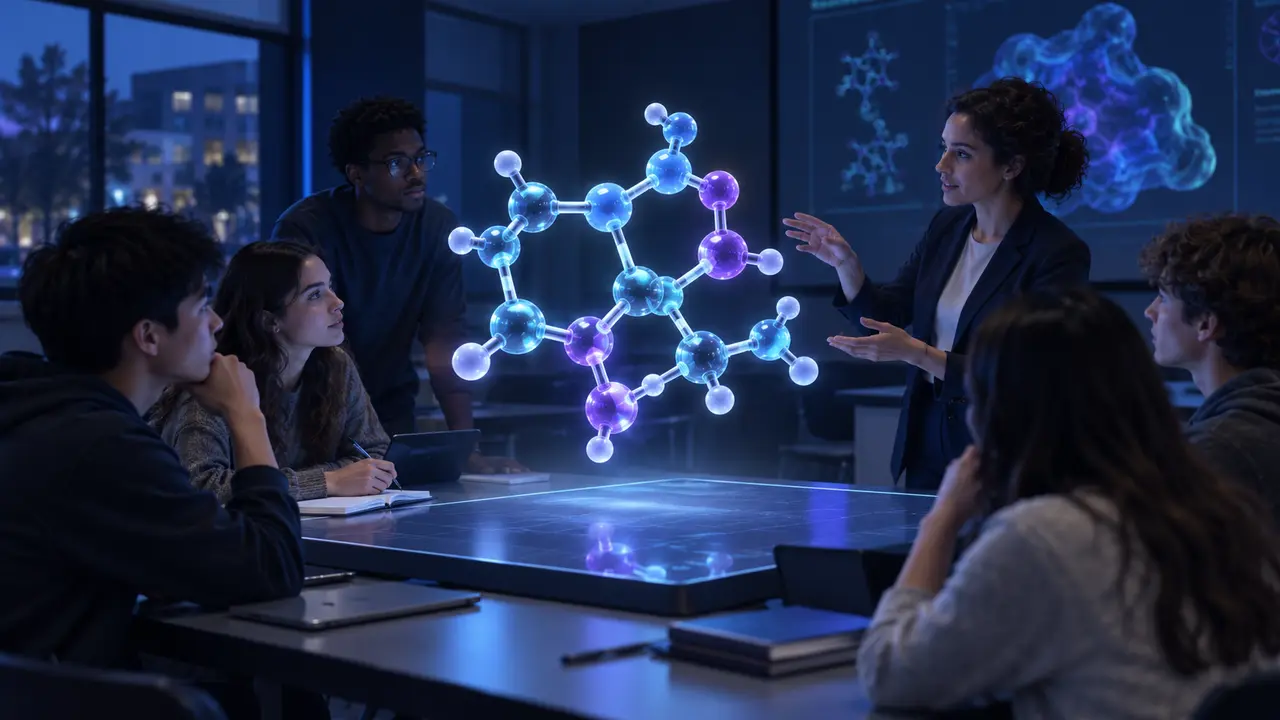 Original HoloNexa editorial illustration. It is not an official product photograph.
This research-based guide uses manufacturer documentation for product facts. Evaluation and buying guidance are independent analysis; it is not presented as hands-on testing.
Start with the difficult concept
Spatial technology earns its place when perspective, scale, structure or presence is hard to communicate on paper. Anatomy, molecules, geometry, engineering and cultural objects are natural candidates.
Write the learning objective before selecting the device. If students only need to watch a flat video, a bright conventional screen may be more accessible and economical.
Measure learning
Compare pre- and post-lesson understanding, retention and misconceptions—not only excitement. Record teacher preparation time, technical interruptions and the ability to reuse content.
A small content library aligned to the curriculum is more valuable than a large collection of spectacular but unrelated models.
Official sources
Specifications, availability and program terms can change. Confirm current information on the linked manufacturer pages.