RayNeo X3 Pro: AI glasses move beyond a portable screen
What standalone AI+AR changes—and the privacy, battery and ecosystem questions buyers should ask.
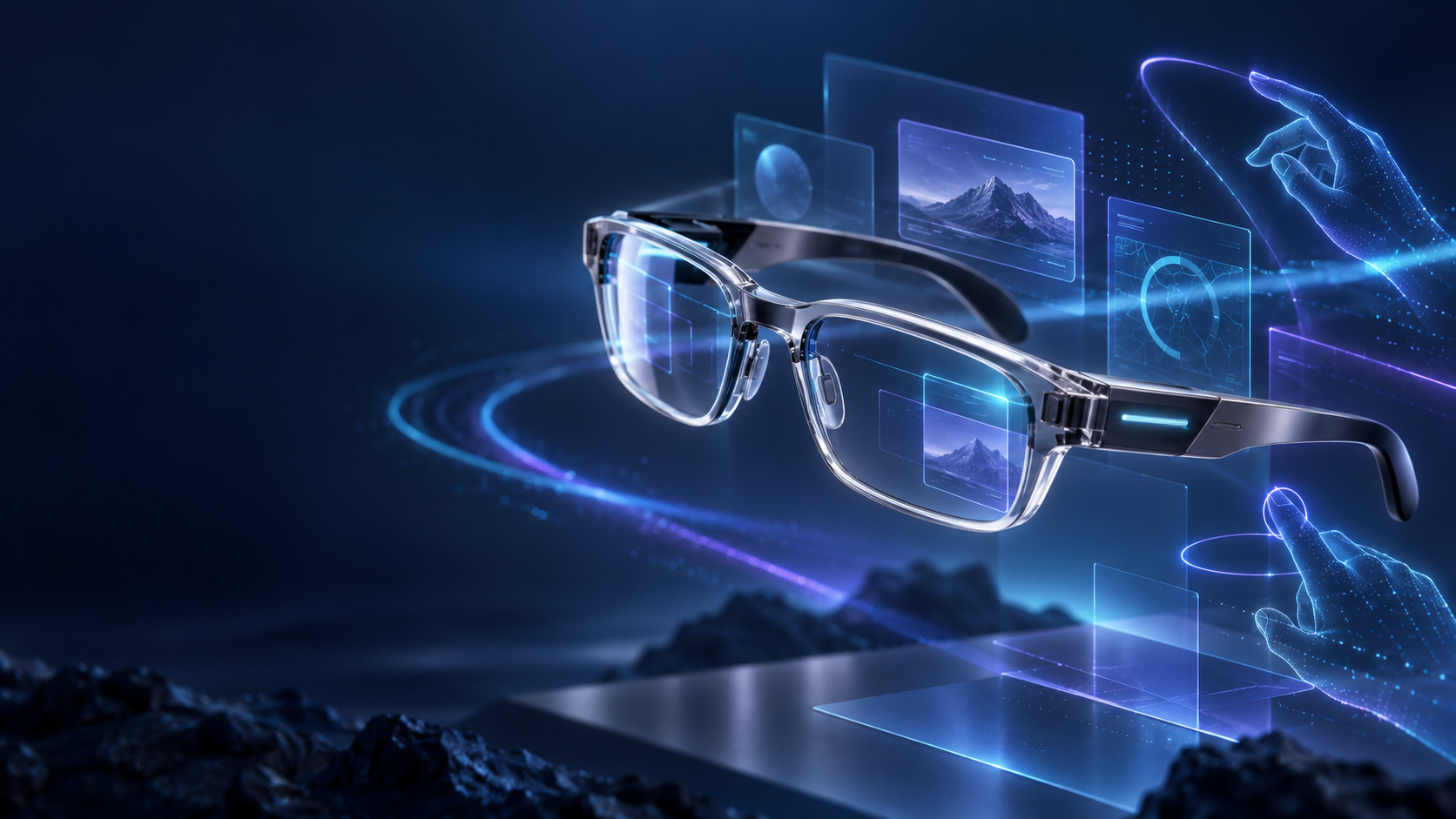
 Original HoloNexa editorial illustration. It is not an official product photograph.
This research-based guide uses manufacturer documentation for product facts. Evaluation and buying guidance are independent analysis; it is not presented as hands-on testing.
A different class of glasses
The X3 Pro combines binocular displays, cameras, onboard computing and RayNeo's software platform. The official product page highlights Gemini assistance, translation, navigation, capture and developer capabilities. That makes it closer to a wearable computer than a simple tethered monitor.
Capabilities that look similar in a feature list can behave very differently in daily use. Field of view, legibility outdoors, input methods, heat, battery life and network dependence shape the real experience.
Privacy and service questions
Camera-equipped glasses introduce social and organizational responsibilities. Review recording indicators, data processing, cloud dependencies, account deletion and workplace policies before deployment. Do not assume that a familiar AI brand means every interaction is processed identically.
Check which apps are currently supported in your country and whether key features require a subscription or phone connection. Product software can change faster than hardware specifications.
Who should wait
Developers and early adopters may value the standalone platform and visible information layer. Buyers who mainly want movies or gaming may get better value from simpler display glasses. Organizations should pilot with a narrow, approved workflow.
Future affiliate links on HoloNexa will be marked. The official product and program pages remain the source for current availability and terms.
Official sources
Specifications, availability and program terms can change. Confirm current information on the linked manufacturer pages.