Meta VR Glasses 2027 buyer’s guide: price, release date and what the puck changes
Meta VR Glasses are planned for spring 2027 at $1,299.99. Here is what Meta has confirmed about the 100-gram design, 5K display, external puck, battery life and launch content—and what buyers still need to know.
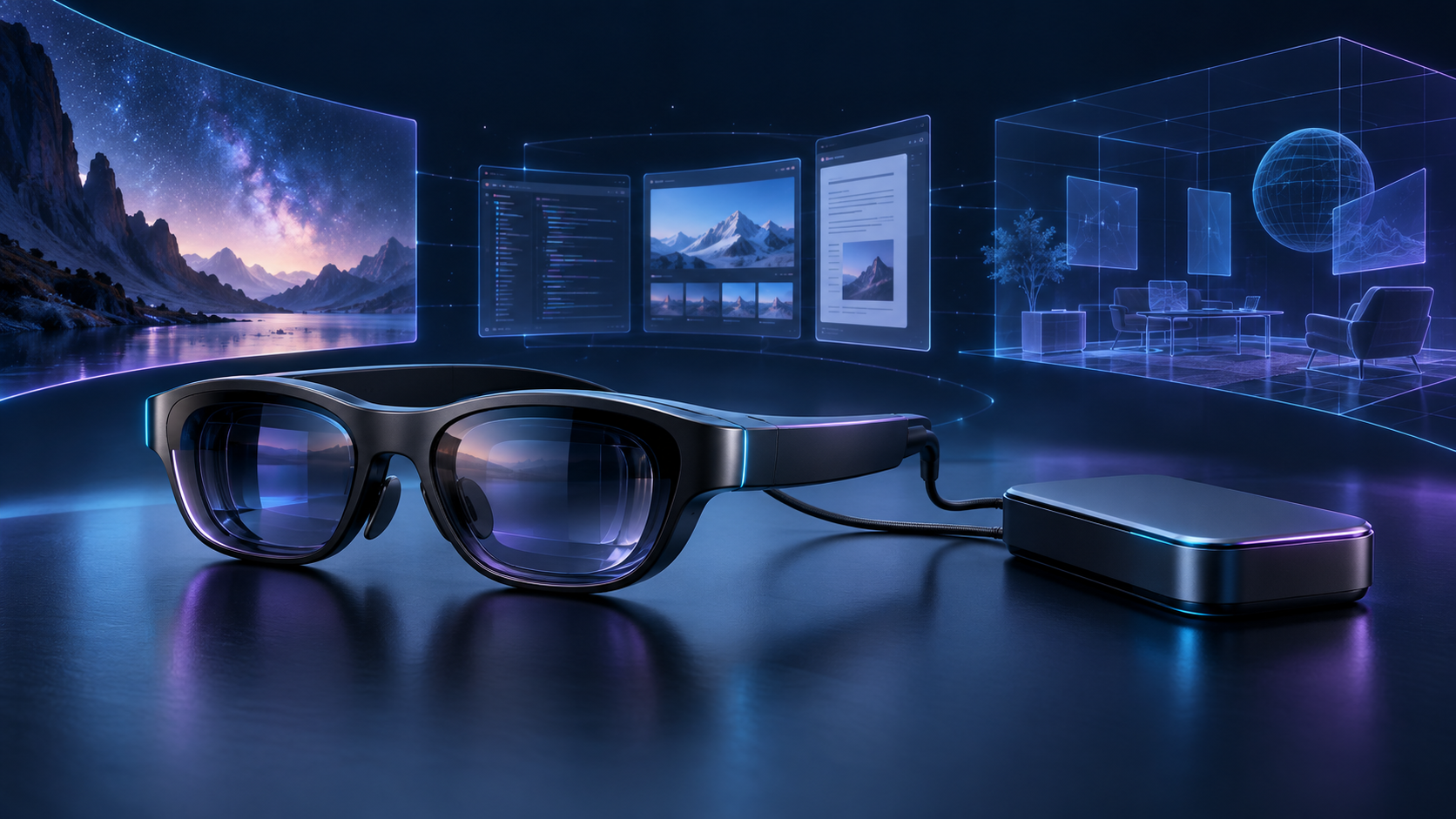 Original HoloNexa editorial illustration. It is not an official product photograph.
Documented compatibility can change with hardware, software and accessory revisions. No hands-on testing is claimed.
This research-based guide uses manufacturer documentation for product facts. Evaluation and buying guidance are independent analysis; it is not presented as hands-on testing.
The short answer: announced, but not on sale yet
Meta says Meta VR Glasses will go on sale in spring 2027 for $1,299.99 in the United States. The company announced the device on September 23, 2026, but has not published a specific launch day, preorder schedule, supported-country list or regional prices. HoloNexa therefore treats it as an upcoming product rather than a current purchase option.
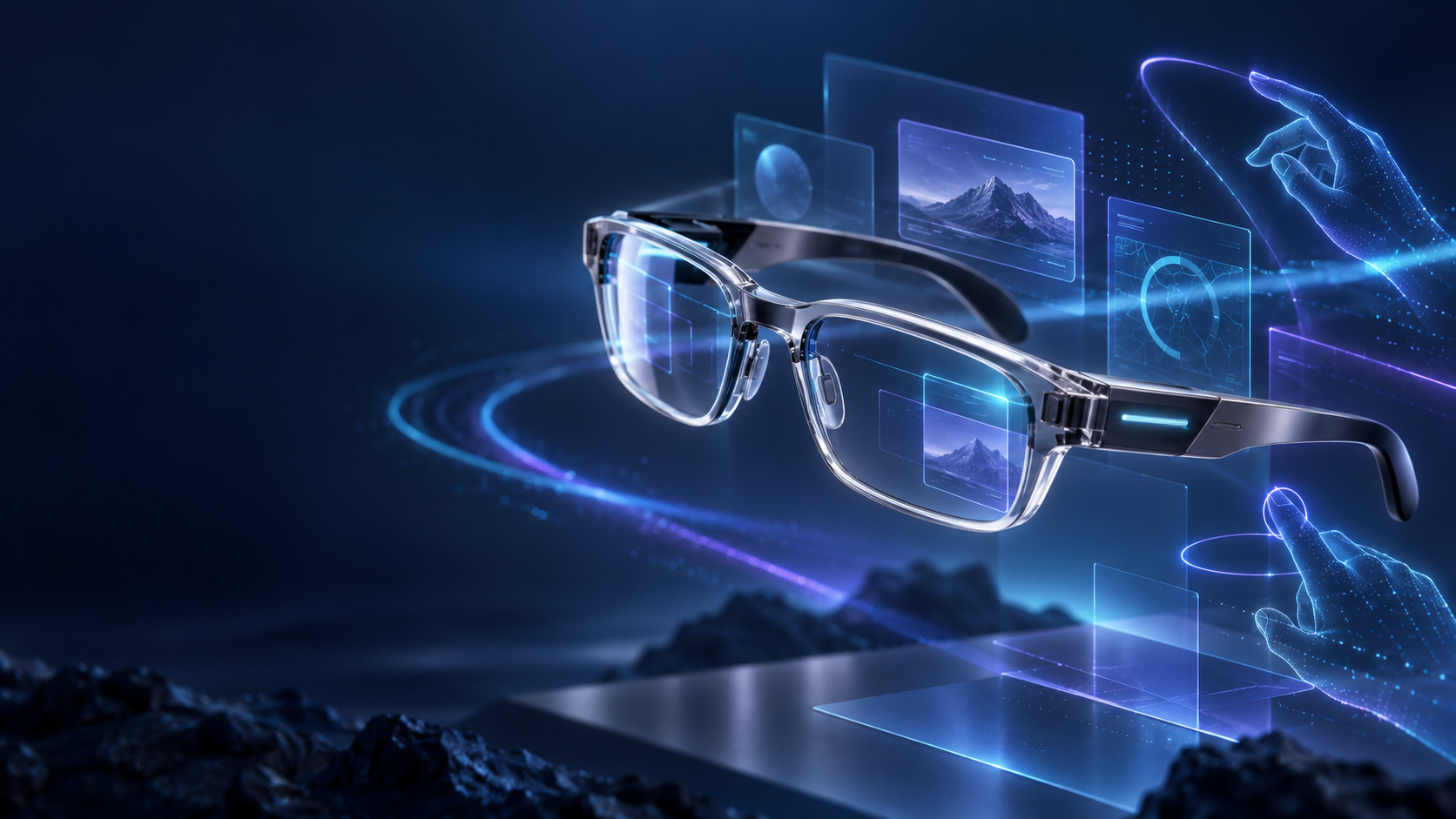
The product is a full virtual-reality system in a glasses-shaped front unit, not transparent everyday AR eyewear. Full-color camera passthrough lets the wearer see the surrounding room, while the displays remain an enclosed optical system. That distinction is important for people searching for lightweight smart glasses: this device is closer in purpose to an immersive headset than to camera-and-audio glasses such as Ray-Ban Meta.
Confirmed price, release window and core specifications
Meta’s confirmed US price is $1,299.99, with availability planned for spring 2027. The glasses component weighs about 100 grams. Meta describes a 5K Infinite Display using micro-OLED panels, 37 pixels per degree and custom compact pancake lenses, with Dolby Vision video and Dolby Atmos spatial audio integrated into the frames.
The system uses Qualcomm’s Snapdragon Reality Elite processor. Control is designed around voice, eye tracking and natural hand gestures rather than bundled handheld controllers. Meta also says the product will support full-color passthrough, a private multi-screen workspace, hand-only games and immersive media. These are announced manufacturer specifications and software plans, not measurements from independent HoloNexa testing.
Why the compute puck matters
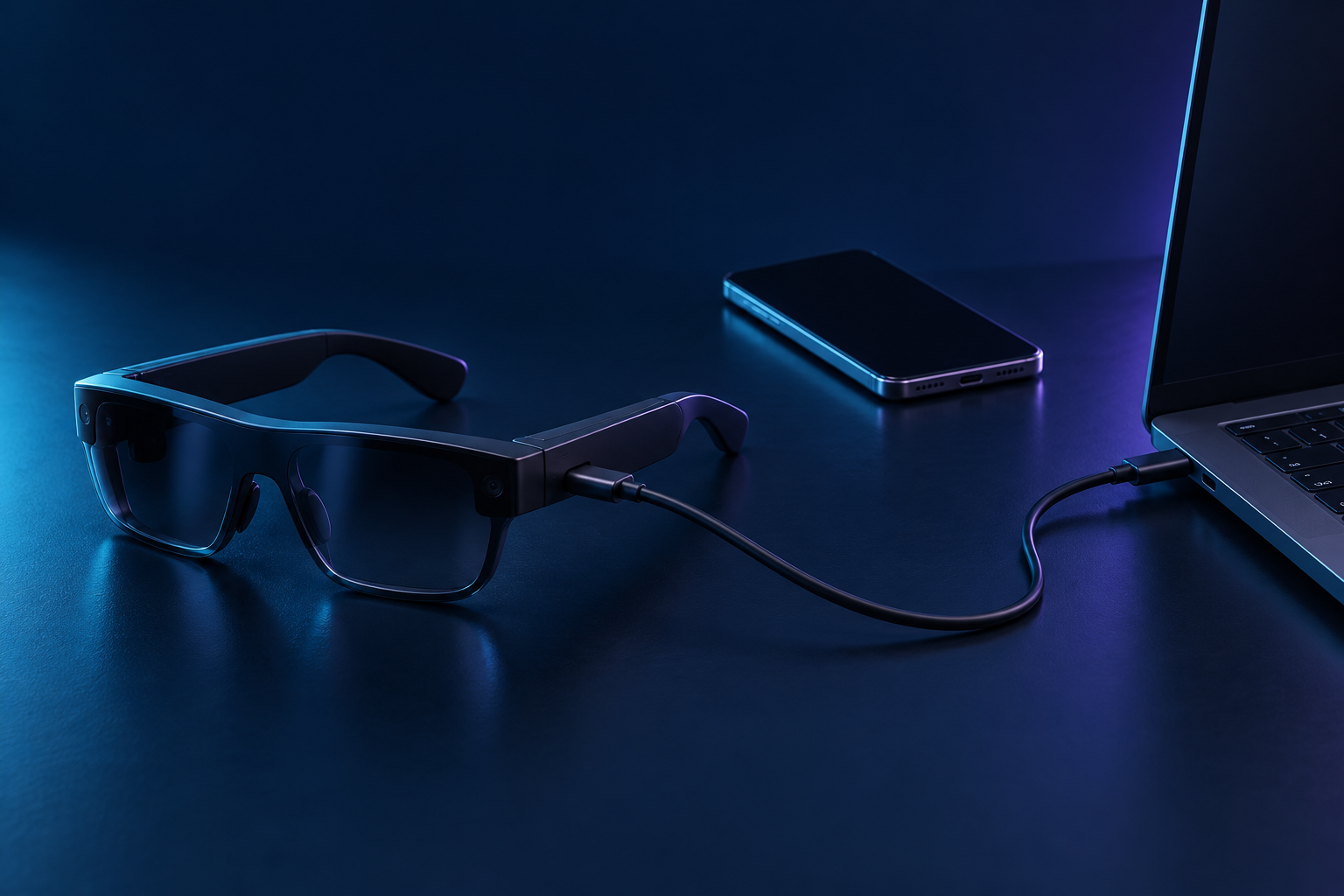
The design separates the system into two parts. Sensors, optics and displays remain on the face, while a wired puck carries the main computing hardware, battery and storage. An optical tether connects the two, and Meta says the puck can clip to a pocket or bag. Moving heat and weight away from the face helps explain how the front unit reaches roughly 100 grams.
The trade-off is that the complete system is not literally a pair of glasses alone. Buyers will need to manage a cable and a second device whose size, storage configurations, durability and replacement cost are not fully detailed on Meta’s public announcement page. Comfort depends on more than front-unit weight: cable routing, facial pressure, heat, fit and the way the puck moves during use all need hands-on evaluation.
Display clarity and the meaning of 5K
Meta calls the optical system a 5K Infinite Display and specifies 37 pixels per degree. Pixels per degree is useful because it connects display density to the wearer’s field of view; however, the announcement does not publish every panel dimension, binocular overlap value, field-of-view figure or supported refresh-rate mode needed for a complete optical comparison.
The company positions the display for readable text, films and productivity. Micro-OLED panels and pancake lenses can support a thinner optical stack than older headset designs, but the announcement alone cannot establish edge clarity, glare, motion quality, color accuracy or comfort for prescription users. Buyers should wait for complete technical documentation and independent testing before treating the 5K label as a direct guarantee of perceived sharpness.
Battery life, charging and long-session use
Meta states that the puck provides up to three hours of continuous high-resolution media playback and supports 45W fast charging. The company also says the system can charge while it is being used. The three-hour figure is a specific media scenario, not a promise for every game, workspace, passthrough or mixed workload.
A full-length film may fit inside that window, while a workday or long flight would require charging access or breaks. Battery aging, brightness, wireless use, tracking load and application demands may change runtime. Meta has not yet published a complete battery-capacity figure, replacement policy or standardized results for every operating mode, so those remain open ownership questions.
Movies, sports and gaming: launch promises versus access
Meta says the device will be the first IMAX Enhanced certified VR product and names 3D and immersive-media partners including Disney+, Prime Video, YouTube, DIRECTV, AMC+, Crunchyroll, ESPN, Peacock, HBO Max and Paramount+. It also plans more than 100 immersive live sports events per year and over 75 hand-tracked games at launch, with additional games available through Xbox Cloud Gaming.
Partner names do not mean every title, sport or feature will be available in every country or included in the hardware price. Streaming subscriptions, territorial rights, broadband requirements and separate cloud-gaming plans may apply. Meta says thousands of titles are planned internationally by launch, but buyers should verify the exact catalog and service terms in their market when sales begin.
Workspace input and hologram calling
For productivity, Meta describes one or more private virtual screens and a feature that turns a flat surface into a keyboard and touchpad. This could reduce the need to carry a physical keyboard, but typing speed, error rate, ergonomics, tracking reliability and application compatibility have not been established through independent use. People considering the device for work should also check account management, data handling and whether their normal desktop tools are supported.
Meta also announced hologram calling: a photorealistic digital representation intended to reproduce real-time expressions and reactions in calls, including WhatsApp and Zoom. This is a generated spatial representation, not a physical hologram in the room. Camera capture, processing, identity controls, bystander privacy and the accuracy of inferred expressions will require clear documentation before workplace deployment.
Who should consider it—and who should wait
Early adopters who already use VR for films, immersive sports, simulation or private multi-screen work may value a much lighter front unit. Developers and enterprise pilot teams may also have a concrete reason to study the new form factor. Their decision should include the complete system, software access, account requirements, support terms and the practical effect of the tethered puck—not only the 100-gram headline.
Most buyers should wait for a firm order date, regional availability, complete optical specifications, storage choices, prescription guidance, privacy documentation and independent comfort testing. At $1,299.99, Meta VR Glasses sit well above mainstream Quest pricing. HoloNexa’s analysis is that the weight redistribution is strategically important, but the announced launch package is not yet detailed enough for a final value verdict.
Frequently asked questions
When do Meta VR Glasses launch? Meta says spring 2027, without a specific date. How much will they cost? The confirmed US price is $1,299.99. How heavy are they? Meta says the glasses component weighs about 100 grams; the compute puck is separate. Are they wireless? No—the glasses connect to the puck through an optical tether. How long does the battery last? Meta claims up to three hours of continuous high-resolution media playback.
Are these transparent AR glasses? No. They are immersive VR glasses with full-color camera passthrough. Do they need controllers? Meta says voice, eyes and hand gestures provide the main input, and more than 75 launch games are planned for hand-only play. Has HoloNexa tested them? No. This guide analyzes Meta’s official announcement and product material verified on September 24, 2026.
Official sources
Specifications, availability and program terms can change. Confirm current information on the linked manufacturer pages.